

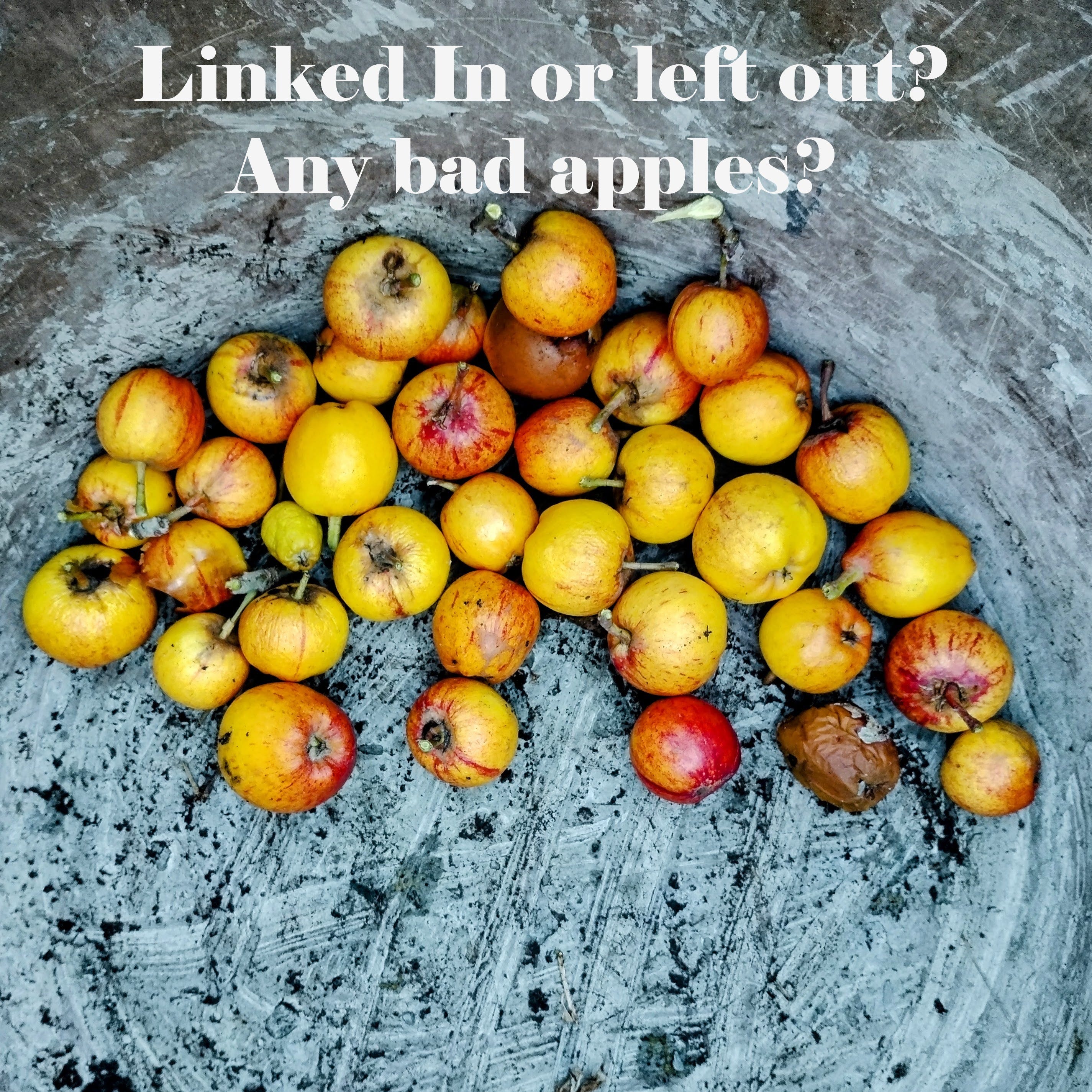
I asked Chat GPT for it’s opinions on Linked In (I can’t handle LinkedIn as one word so I’m choosing to call it Linked In and celebrate the space - sorry if that’s like pissing on your chips). In seconds I found myself staring at a screen full of bullet points and those long dashes which, for some reason, my laptop can’t replicate. We’re so far behind here in rural, coastal, backed up and slightly chilly eastern Scotland in ’26. The Chat Bot duly said there were pros and cons. Some deadpan useful points and some dead end useless ones. It didn’t inspire me to join Linked In but obviously millions have and will carry on inside it’s digitally hallowed halls. I’m also over 70 and unemployed and/or retired, depending on how you view these things, so I don’t think I need it. “Vigourous anonymity” remains my formula for a comforting and serious lack of success in recent years, meaning that I’ve reached the stage in life where things are somehow “different”.
Back in the day I had a fairly responsible series of jobs over which numerous flows and currents of water have now passed and kindly obliterated any evidence of my input. I live (happily) on as an erased man. There may be some trace of me in faded gold letters on dark wooden management post holder boards scattered across various (vaguely secretive) establishments. That’s likely all that remains, the full archaeological record shines on like a dead man’s iphone torch.
I could’ve joined the ranks of Linked In years ago but I didn’t. My career path and the nature of my work (mostly with hazardous, volatile and nasty materials) made me decide I wasn’t the right person to be advertising my cooked up skills and specialist managerial experience. In a nutshell there was enough going on in my sphere of existence not to feel that I needed a LI leg-up. But I’ve kind of observed it from the outside and formed some lukewarm but safely distanced opinions.
I first became a manager in the late seventies in what was a very male saturated and hard edged environment. Women did things like typing and filing mostly. Almost everyone was white and smoked and drank heavily at work and often on the journey to and from work. Meetings were tense and formal and there would be swearing, strong opinions voiced, finger wagging and public (in terms of the meeting) retribution. It was a bear pit that you had to crawl up and out of by yourself. I was about twenty two at the time.
A series of strategic job moves were required to advance and you’d work these out over a five or ten year period. A good profile and a good performance review every year had to be achieved. High marks and a firm handshake and you’d move up eventually. A few drinks in the officers’ club now and then. Apply for the job nobody wants. Get noticed. Host visits. Talk yourself up. Golf helped but I wasn’t interested in that. There were a lot of casualties along the way.
The toughest test was in the question, “Are you mobile?” There was only ever one correct answer.
By my early fifties, by hook, crook and mobility, I’d hit the top. It was the top for a fellow with my background anyway, and the path behind me was strewn with the bodies of the bright and not so bright colleagues of mine who hadn’t or couldn’t quite make it. There was a festering resentment there that we all understood but seldom mentioned. Once in a while “things” rose to the surface but they were always beaten back with moves away, redundancy offers or sideways shifts. I had learned how to play the game and when to bend the rules.
An older and wiser manager once pointed to the main building door and said, “See that door? Everyone walks through it every day. Just make sure that when you do, you’re earning more than anyone else going through.” That was not embroidered on any of the cushions in the staff canteen.
So what about Linked In? I guess most aspiring anythings feel that need to put something up there. Skills, qualifications, experience, networks and successes. Nobody will be too honest, that would be stupid; so most of those profiles will, I imagine, read the same way. A good school or uni mention will help. Some project bragging rights. Lots of activity descriptions, vague but well worded, of course your contacts matter, positive comments, shared material and holiday photos, your BMW M Series grille set at the right angle, inspiring quotes and lots of likes. Sell, sell, sell. You need to build a head of steam. Presumably at some point the algorithm will give you some kind of boost into the stratosphere or at least into some rival’s bouncier timeline.
You can pay the extra bucks and “get further” or gain access to some corporate lounge or luxury viewing area. Premium tiers promise more visibility and data. Whether that materially changes outcomes is debatable, but the implication is clear; access can be controlled for money. Once there you can parade like some prize bull in the market ring and “get noticed”. Maybe I’m being naive here. It’s not a meat market but exactly what does your profile picture really say about you? Maybe it’s not transactional and really just like Instagram or Facebook but less toxic and straight laced, at times. Business is a serious business.
Numbers always matter. Followers and some kind of career arc or narrative that looks plausible, even believable. We can see by your many friends and vibrant postings you’re not at all any kind of nutcase, a narcissist, a psycho, unstable, unreliable or a fake. Still connecting with strangers comes with risks. Sex pests and bores. (Bots are not welcome either and they are useless at water cooler chat and on karaoke nights.)
What then have I missed out on? Well, I have friends and family on LI. They seem to use it. No one really complains. It works smoothly, though perhaps without any obvious benefits unless you dig a little deeper. There will be figures somewhere for job move related transactions in their vaults, perhaps. (If that could be reliably recorded or properly credited, it might be useful.) So add in your testimony and accomplishments; becoming a partner, having a good day or simply moving on. Tell the world you’re here, or at least still breathing in a world where everyone else is “passionate,” “strategic,” and “results driven.” Reality is tidier and more polished online than it ever was in any working office. But an online only life can be pretty lonely.
Of course you can take a holiday from you own troubles and allow yourself a few moments of gloating over someone else’s misery or the quiet satisfaction at how they struggle in their hollow desperation to avoid being overlooked. It’s yet another social media platform to carpet bomb across, chat on, laugh or lurk on, depending on your needs and appetites. You might just feel superior for a bit. Enjoy yourself but don’t kid yourself. It’s not the Wild West but it’s probably not what it seems either.
Linked In’s demographics tell their own story. The under 35s dominate it, while the over 55s are almost invisible. No wonder I feel detached and slightly cynical. Asia and South America feature prominently, which makes perfect sense given how industry and business trends are shifting. The digital backwaters of the old world are also mapped clearly in the numbers. How many years before these streams dry up and die altogether?
Many users seem to treat it as a hybrid business ecosystem in its own right. Yet it’s hardly inclusive. It operates within a particular stratum. I picture aspirational people in modest roles striving to climb a steep, narrow ladder, where mastering the language and accumulating Linked In status points become measures of success. It is what it is. Another Tower of Babel fixed within a planetary wide system filled with similar virtual towers. It’s what people do. I’m content to be missing out and you’ll not find me in or on there anytime soon.
Never forget; “The platform rewards visibility.” So stay hydrated, don’t forget that people always notice your predilections and you must remain observant.